
Monday, August 21, 2017
A day of memory
August 21- Daily Word—SPECIAL ECLIPSE EDITION— "And it was about the sixth hour, and there was a darkness over all the earth until the ninth hour. And the sun was darkened, and the veil of the temple was rent in the midst." (Luke 23:44)- Of course, there is no prophetical coincidence that I am trying to make with this—except as a form of remembrance. In this passage, Christ had been on the cross for several hours; the sixth hour was @ noon... and suddenly an eclipse darkened the sun. Why? Because God did not want to look upon the suffering of His Son—Now, I am not certain if God used a standard solar eclipse like we will see today, or if He moved His hand to blot it out Himself... but either way, from @ noon to three there was an eclipse. Today, when you look up in the sky to see the sun blotted out, remember that @ 1988 years ago, in a little town @ 6500 miles away called Jerusalem, there was an eclipse, when Jesus of Nazareth, the Son of God, laid down His life so that YOU would not have to spend an eternity in Hell. He died in the dark for you, so that you could live in the light. Let today be a remembrance of that.

Wednesday, June 21, 2017
Lessons from Shamgar
"...after him was Shamgar the son of Anath, which slew of the Philistines six hundred men with an ox goad..." (Judges 3:31)
The Pastor who led me to Christ would only use the KJV Bible; and likewise I only use the KJV as the inspired and preserved Word of God.
However, something that he did always stuck with me. We were out on visitation, and had an opportunity to present the Gospel to a young man. This young man excitedly brought out the NASB that his Grandmother had bought for him right before she died.
Now, there are some who treat the KJV like an idol... similar to "Nehushtan" (* II Kings 18:4), and they would have immediately started ranting about translators, the new Greek text, and preservation—thoroughly condemning the use of the offensive version, and irrevocably ruining the chances of the young man ever receiving the Gospel.
But what did he do? He showed that young man the Gospel in that NASB; and the Holy Spirit convicted that young man of his lost condition, which later culminated in the young man accepting Christ as his Savior.
I guess a way to look at it is this; Shamgar didn't have a sword, he used an ox goad.
I always consider that when I think of the Bible; I will only use the KJV, especially for doctrine, but we should always be ready to use whatever is at hand.
The Pastor who led me to Christ would only use the KJV Bible; and likewise I only use the KJV as the inspired and preserved Word of God.
However, something that he did always stuck with me. We were out on visitation, and had an opportunity to present the Gospel to a young man. This young man excitedly brought out the NASB that his Grandmother had bought for him right before she died.
Now, there are some who treat the KJV like an idol... similar to "Nehushtan" (* II Kings 18:4), and they would have immediately started ranting about translators, the new Greek text, and preservation—thoroughly condemning the use of the offensive version, and irrevocably ruining the chances of the young man ever receiving the Gospel.
But what did he do? He showed that young man the Gospel in that NASB; and the Holy Spirit convicted that young man of his lost condition, which later culminated in the young man accepting Christ as his Savior.
I guess a way to look at it is this; Shamgar didn't have a sword, he used an ox goad.
I always consider that when I think of the Bible; I will only use the KJV, especially for doctrine, but we should always be ready to use whatever is at hand.
Friday, March 17, 2017
The story of our lives...
The process that I use to write a book varies for each one—interestingly, that process tends to vary depending on which genre I am writing in—but, there are certain similarities that I want to discuss. With each novel, I generally have a beginning and an end already in mind, and then I write the scenes that take place in the middle.
One thing that I've noticed is how the scenes that I write will shape the character, and is not only a reflection of what the end will be, but often ends up recreating the ending for itself.
The first draft of my first book, Kindled Love, had a vastly different ending than the final published version. Why? Because I let the characters shape themselves. The choices that the characters made throughout the book molded and shaped their character, which changed how they responded to trials and tribulations—literally recreating them to necessitate a new ending. (Of course, I still chuckle when I look back at the Anna who yelled and threw things at people...)
In much the same way, our lives have a beginning and an end—one that our choices can change.
First, let us consider our story's end.
Our sin nature has written the ending of our lives eternally separated from God in a place called Hell; however, the choice we make to reject or accept Christ can either solidify that ending, or necessitate a new ending, with us in Heaven with Christ.
After that, our lives and choices are still having an impact on our story; will it involve standing with head bowed before God in shame, with nothing but a handful of ashes to show for our lives—or will it be standing with head bowed to receive a crown of Glory, as Christ proclaims, "Well done, thou good and faithful servant..."
Those choices will both be available as your character responds to the trials and tribulations it faces in life, and you literally have the chance again to rewrite your ending.
Friend, I'm not certain where you are in your story, but just consider this: your choices will have an impact on the end of your story. Just ask yourself—what do you want that ending to be like?
"And I saw the dead, small and great, stand before God; and the books were opened..." (Revelation 20:12)
One thing that I've noticed is how the scenes that I write will shape the character, and is not only a reflection of what the end will be, but often ends up recreating the ending for itself.
The first draft of my first book, Kindled Love, had a vastly different ending than the final published version. Why? Because I let the characters shape themselves. The choices that the characters made throughout the book molded and shaped their character, which changed how they responded to trials and tribulations—literally recreating them to necessitate a new ending. (Of course, I still chuckle when I look back at the Anna who yelled and threw things at people...)
In much the same way, our lives have a beginning and an end—one that our choices can change.
First, let us consider our story's end.
Our sin nature has written the ending of our lives eternally separated from God in a place called Hell; however, the choice we make to reject or accept Christ can either solidify that ending, or necessitate a new ending, with us in Heaven with Christ.
After that, our lives and choices are still having an impact on our story; will it involve standing with head bowed before God in shame, with nothing but a handful of ashes to show for our lives—or will it be standing with head bowed to receive a crown of Glory, as Christ proclaims, "Well done, thou good and faithful servant..."
Those choices will both be available as your character responds to the trials and tribulations it faces in life, and you literally have the chance again to rewrite your ending.
Friend, I'm not certain where you are in your story, but just consider this: your choices will have an impact on the end of your story. Just ask yourself—what do you want that ending to be like?
"And I saw the dead, small and great, stand before God; and the books were opened..." (Revelation 20:12)
Tuesday, January 31, 2017
Are We Combat Ineffective?
There
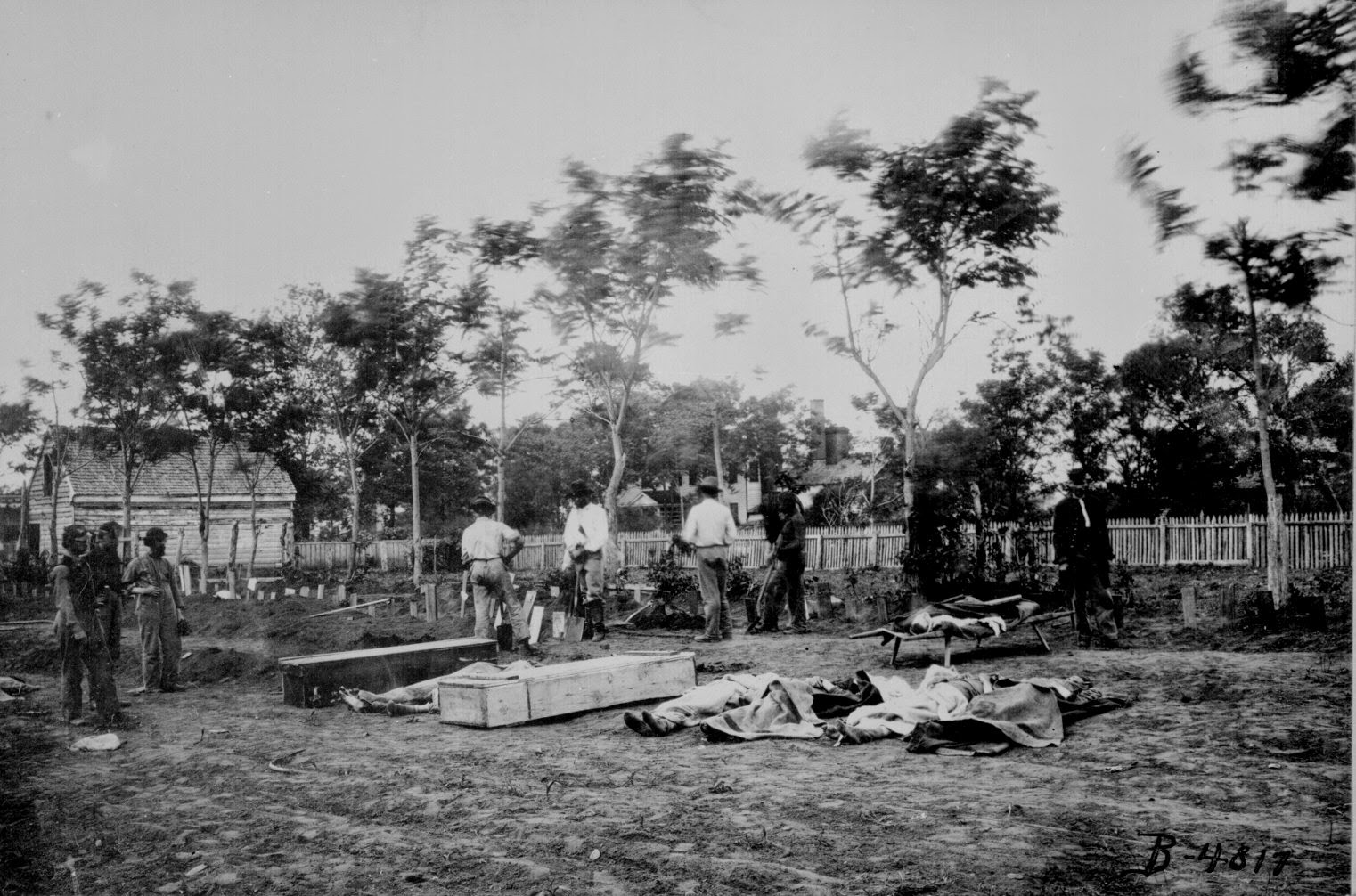
was a brief silence on the battlefield as the firing ceased. The smoke of
battle slowly cleared, exposing numerous casualties strewn across the field. You
begin to hear the ragged sound of men screaming in pain as they lay on the
ruined field. Two teams of medics crawl out of their holes and move toward the shattered
bodies of soldiers; one moving slowly towards the fallen enemy, while the other
slowly approaches their own wounded.
You
stand and watch as the medics slowly work their way through the enemy wounded,
applying medical care almost lovingly; pressure dressing to stop the bleeding,
morphine for the pain... Slowly, the comforted enemies screams decline in
severity and volume.
 That's
when you notice the other team of medics. Like the first, they are moving from
soldier to soldier taking care of your compatriots. Pausing briefly between
each casualty, they end their screams of pain with a quick slash of a knife
across the throat.
That's
when you notice the other team of medics. Like the first, they are moving from
soldier to soldier taking care of your compatriots. Pausing briefly between
each casualty, they end their screams of pain with a quick slash of a knife
across the throat.
Wait, what?
This disturbing scene
is horrible to consider, yet is played out in Churches across the United States
on a weekly basis. Christians who will lovingly approach the lost with a gentle
hand will not have a second thought about spiritually destroying a fallen
Christian. They will rip a fallen Christian to shreds and walk away believing they
have done the Lord’s work. The reason for this is simple; we have lost the love
of the brethren. We see the Great Commission as the end all of Christianity,
and have a desire to fulfill it, but have crippled ourselves to the point of ineffectuality with our Pharisaical attitudes.
When I was in the Army
we learned a very scary term: Combat Ineffective… it reflected that a unit is
at 50 to 69 percent troop strength. When a unit loses strength to that level,
they cannot carry out the mission that they were tasked with. That is the
Church in today’s society. We have lost significant troop strength, and as a
result, cannot carry out our mission.
And the blame rests
solely at our own feet.
The Bible tells us clearly, “Brethren, if a man be overtaken in a
fault, ye which are spiritual, restore such an one in the spirit of meekness;
considering thyself, lest thou also be tempted.” (Galatians 6:1) Unfortunately,
that is not our response. Instead, we are destroying those who have been overtaken
and worse yet it is often in an attempt to raise ourselves in the eyes of
others.
Think of how Jesus
dealt with the woman caught in adultery (John 8:3-11) We read that story and
only focus on how Jesus ‘Put those Pharisees in their place,’ but miss the
greater lesson on how to respond to someone who has fallen into sin. I think it
was really a warning to us of how He views our spiritually arrogant attitudes, because
the fact is that the Pharisees are not the only ones who are judgmental about
other people’s failures to the point of destruction.
- We have too many walking wounded that we have spiritually killed instead of offering life sustaining aid to keep them in the fight.
- We do not have the troop strength to carry out the Great Commission to reach enough to replace the ones we have lost.
- As a result, we are not replacing soldiers at the rate that we are losing them.
As soldiers in the Army of the Lord, we are Combat Ineffective. The question we must
ask ourselves is this: What are we going to do about it?
Subscribe to:
Posts (Atom)